Thai recipes
Thai cooking balances salty, sour, sweet and spicy in nearly every dish, which is why it tastes so lively. This page collects quick curries, stir-fries like pad kra pao, noodle dishes, fragrant soups and fresh salads. Every recipe is ready in 20 minutes or less, with a few smart shortcuts like store-bought curry paste.
9 recipes, quickest first.
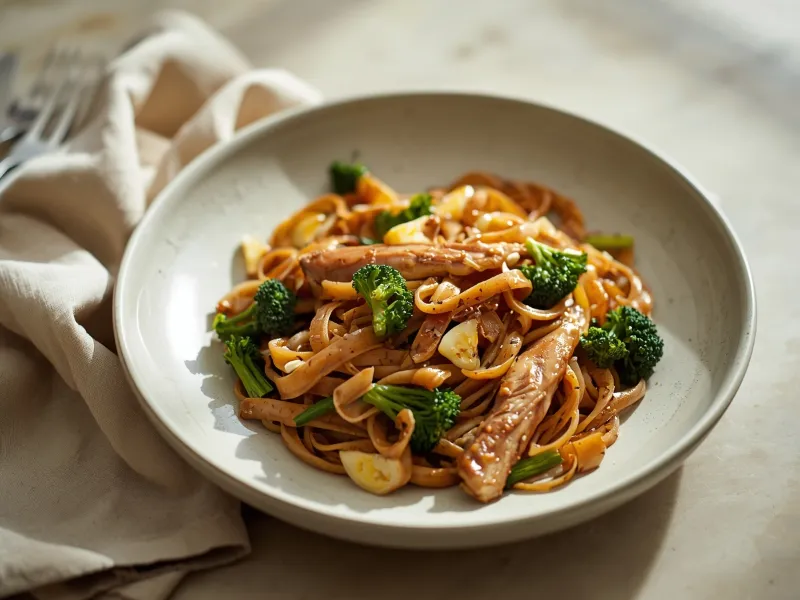 15 min
Chicken pad see ew
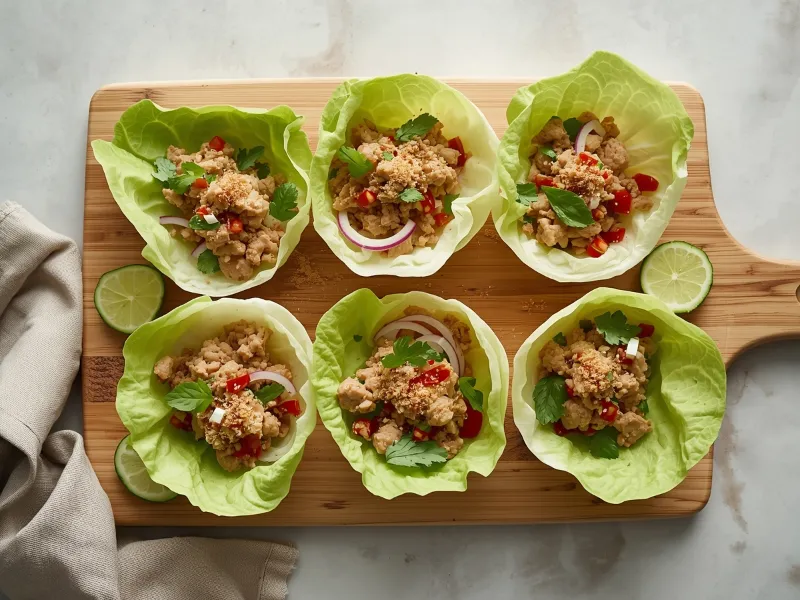 15 min
Pork larb lettuce cups
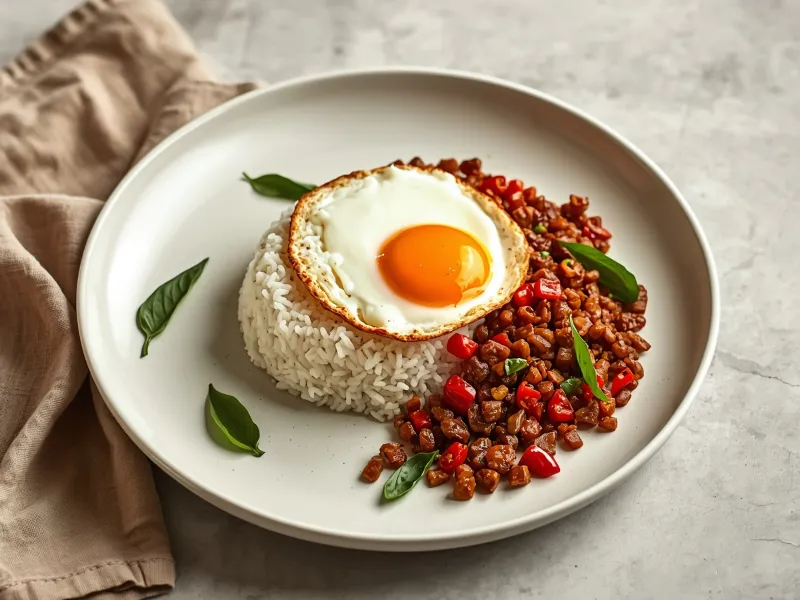 17 min
Thai basil chicken with fried egg
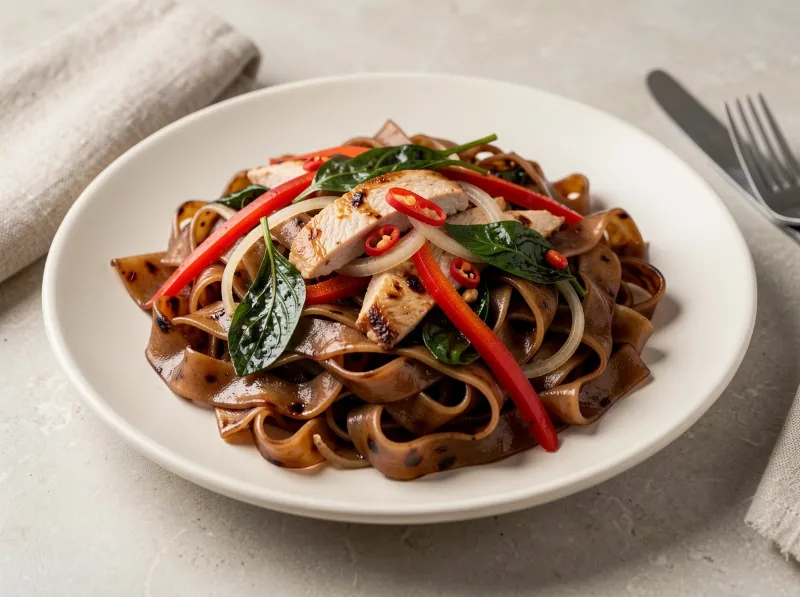 18 min
Drunken noodles (pad kee mao)
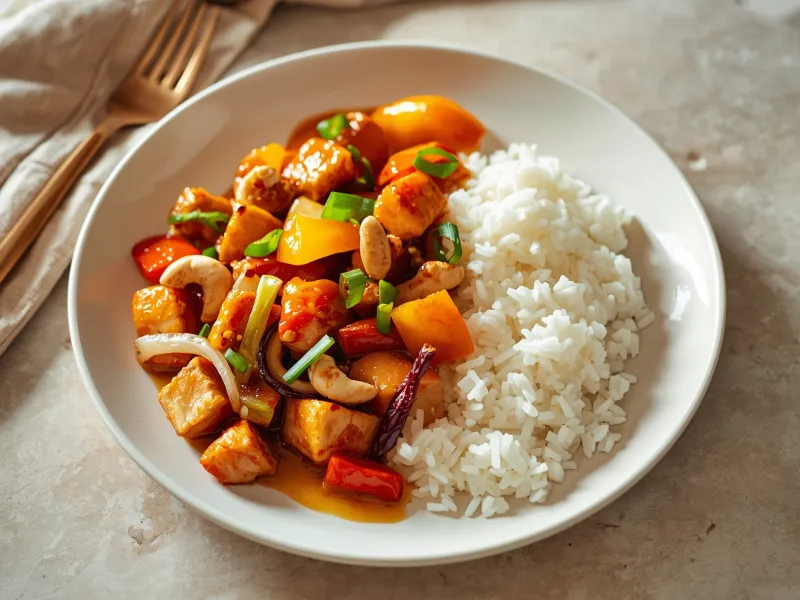 18 min
Thai cashew chicken
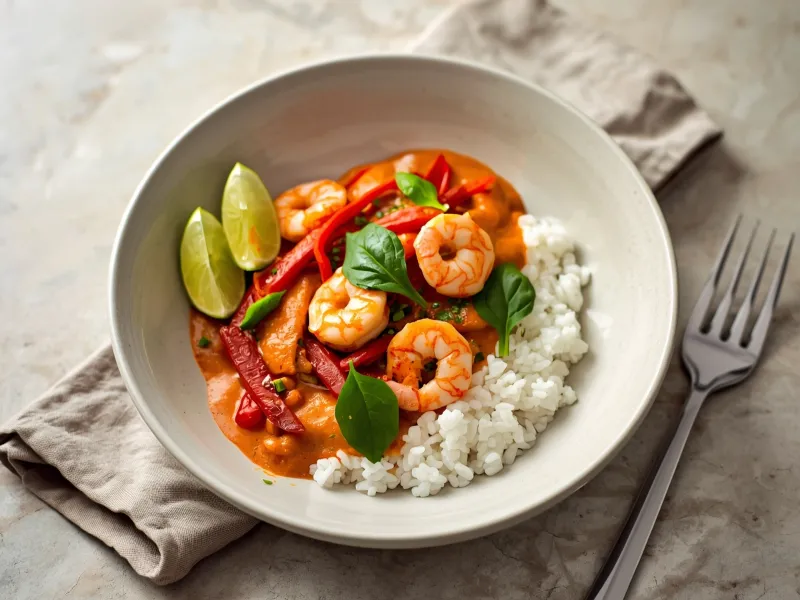 18 min
Thai red shrimp curry
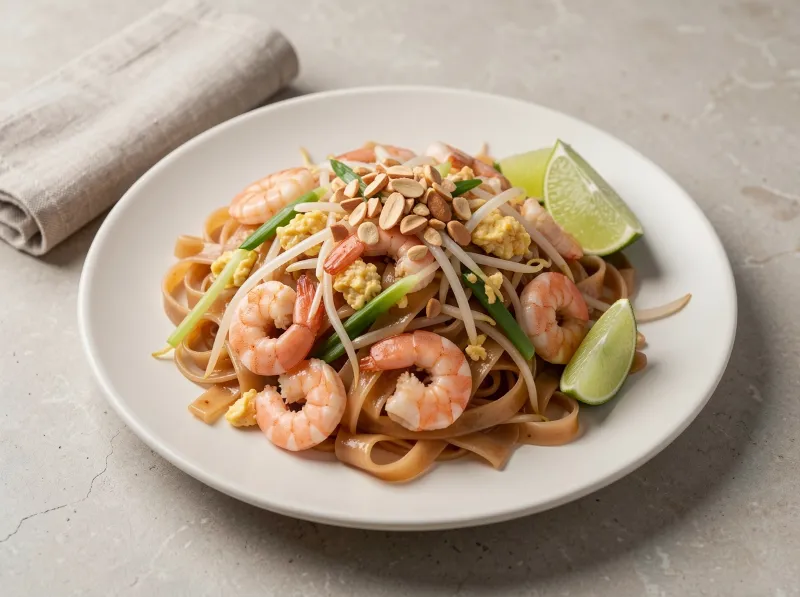 20 min
Shrimp pad thai
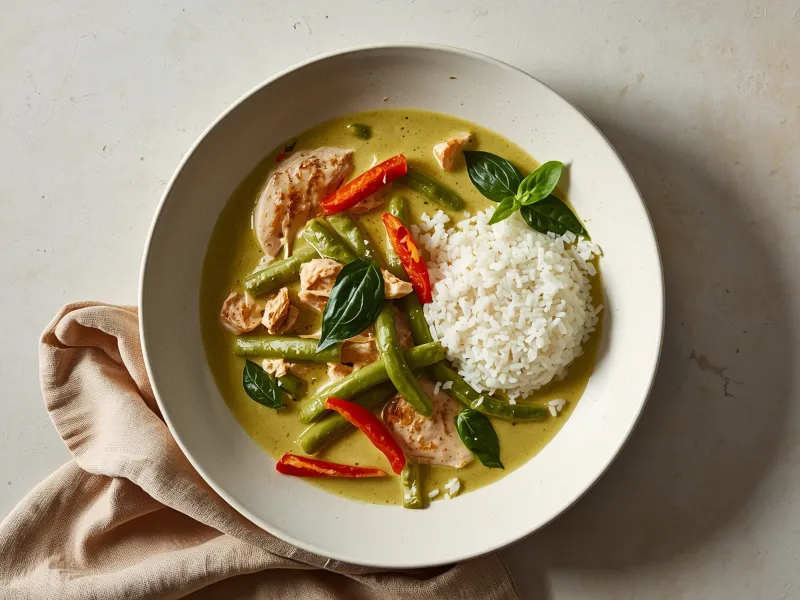 20 min
Thai green curry chicken
 20 min
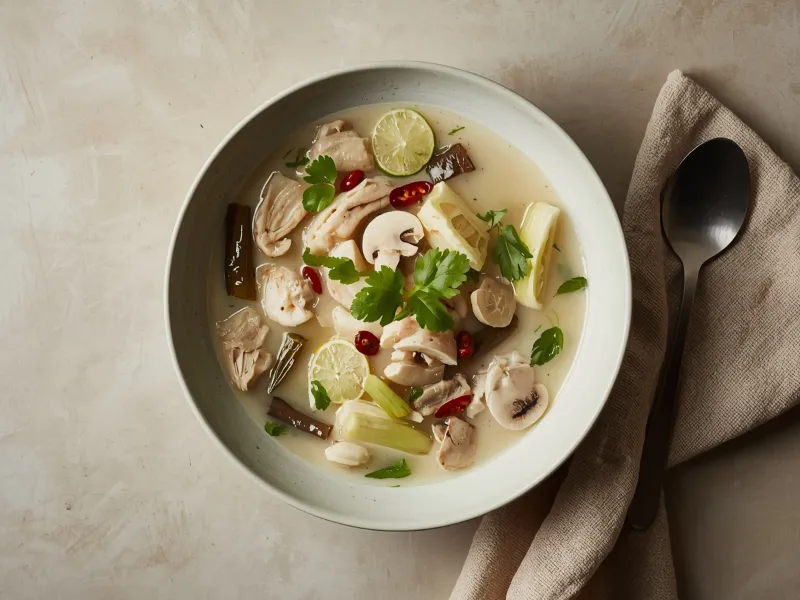
Tom kha gai (coconut chicken soup)
Stock fish sauce, coconut milk, limes, Thai curry paste, rice noodles and jasmine rice, and you can cook most of these on short notice. Fresh herbs like Thai basil and cilantro make a big difference. The tips explain how to adjust the chili level, and how to swap fish sauce for a vegetarian alternative.
Common questions
How can I make a quick Thai curry?
Fry a few spoonfuls of store-bought red or green curry paste in a little coconut cream until fragrant, then add coconut milk, sliced chicken, shrimp or tofu, and quick-cooking vegetables. Simmer until the protein is cooked, then season with fish sauce, a pinch of sugar and lime juice. Finish with Thai basil.
What is the difference between red, green and yellow curry?
Green curry paste uses fresh green chiles and herbs and is often the hottest. Red curry paste uses dried red chiles for a deeper, smoky heat. Yellow curry adds turmeric and warm spices, so it is milder and slightly sweet. Brand heat levels vary widely, so start with less paste and add more to taste.
How do I stop rice noodles from getting mushy?
Soak dried rice noodles in hot (not boiling) water until just pliable but still firm, then drain and rinse briefly. They finish softening in the pan. Stir-fry over high heat, toss gently, and add sauce gradually. Overcooking during soaking or crowding the pan are the most common causes of sticky, broken noodles.